
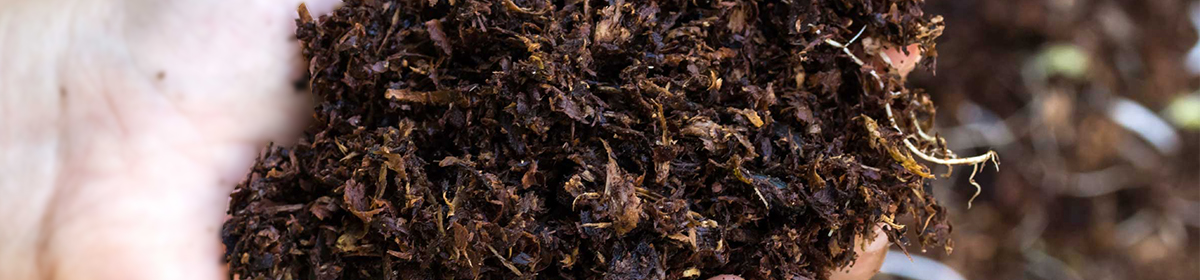
How to Choose the Right Fertilizer Granulation Plant for Your Raw Materials

When you plan a fertilizer production project, choosing the right granulation solution starts with understanding your raw materials. Different materials have different moisture levels, particle sizes, chemical properties, and granulation behaviors. A suitable production system can help you achieve stable operation and produce fertilizer products that match your target market.

Before selecting equipment, you can evaluate your materials, production capacity, and final product requirements. A professional supplier can help you compare different technologies and create a solution based on your actual situation.

Understand Your Raw Materials Before Selecting Equipment

Your raw materials influence the granulation process directly. Some materials have good compressibility and lower moisture, while others require additional preparation before granulation.

For example, organic materials may need fermentation, crushing, and screening before entering the granulation stage. Mineral or compound fertilizer materials may require precise mixing and moisture control to achieve consistent granules.

If you are planning a commercial fertilizer pellet production line, understanding your material characteristics helps you select equipment that matches your production goals.

Commercial Fertilizer Granulation Production Line

Match Granulation Technology with Your Product Requirements

Different granulation technologies create different production advantages. Your choice may depend on the required particle size, granule appearance, production capacity, and energy consumption.

For projects requiring continuous production and stable output, a rotary drum granulator fertilizer production line can be considered as one possible solution. This type of system is commonly integrated with mixing, drying, cooling, screening, and coating processes to create a complete fertilizer production flow.

For materials with different characteristics, other granulation methods may also provide suitable options. Comparing equipment performance with your raw materials helps you avoid selecting a system based only on capacity numbers.

Consider Capacity and Investment Together

Production capacity is another important factor when choosing a fertilizer granulation plant. A small local fertilizer business and a large fertilizer manufacturer usually have different equipment requirements.

Many customers first ask how much does a fertilizer granulation plant cost, but the final investment depends on factors such as raw material preparation, production scale, automation level, and supporting equipment.

An industrial scale fertilizer granulation system may include automatic feeding, batching, granulation, drying, cooling, screening, packaging, and control systems. Reviewing the complete process helps you understand the relationship between investment and production efficiency.

Plan for Future Production Needs

When you design your fertilizer project, you can also consider future product expansion. If you plan to produce different fertilizer formulas or increase output later, a flexible equipment layout may provide more convenience.

Automation can also improve production management. A fertilizer granulation plant with automatic packaging connects granulation with the final packing stage, creating a smoother workflow from raw material processing to finished fertilizer bags.

Click here for more details to explore more fertilizer granulation solutions.

Choose a Solution Based on Your Project Goals

The right fertilizer granulation plant depends on the relationship between your raw materials, product requirements, production capacity, and investment plan. By evaluating these factors together, you can find a configuration that fits your business development.

For more information about fertilizer granulation solutions and equipment options, you can visit https://www.shunxin.eu/fertilizer-granulation-plant/

Machine Selection Tips for Organic Fertilizer Production Manufacturers

With the improvement of living standards, people’s demand for machinery and equipment is increasing, and their dependence on machinery is also gradually increasing, which brings pressure to the development of organic fertilizer production equipment.

In the process of fertilizer production, in order to ensure the safety and operation of the production line, operators need to strictly require themselves to operate the equipment correctly. So how should we operate correctly in the operation of organic fertilizer production line? SX company, a large fertilizer equipment manufacturer, provides you with suggestions.

Requirements for safe operation of organic fertilizer production line

1. Relevant personnel operating organic fertilizer equipment shall receive professional training first and take up their posts only after passing the training.

2. As workers operating organic fertilizer equipment, they should first standardize their working attitude. Because correct operation is closely related to everyone’s safety, we must not be careless in the operation process, otherwise the materials may be damaged and personal safety may be endangered.
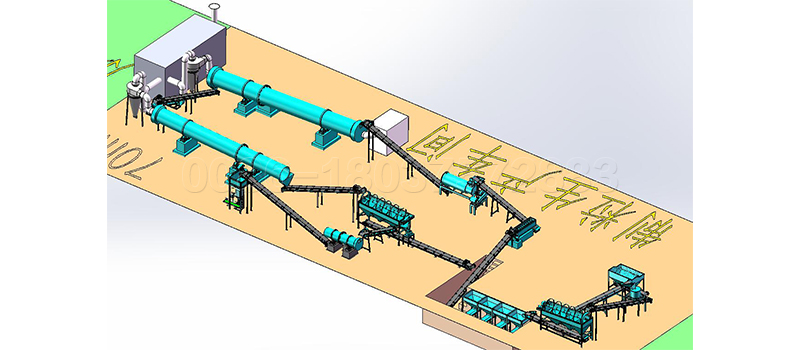
Organic Fertilizer Production Process

3. Organic fertilizer equipment shall be placed in a reasonable position, and attention shall be paid to ventilation and ground wire. When it is found that it cannot be operated, the workshop production shall be stopped immediately, and the problems shall be found out and handled.

4. Clean the machine in time after using the equipment, especially NPK fertilizer granulator. Regular maintenance of equipment appearance and smooth parts can ensure production and quality, and then bring economic benefits to the company.

5. The complete set of organic fertilizer production equipment shall be installed on the horizontal concrete foundation, especially the large equipment such as drum granulator, drum dryer and cooler shall be fixed with anchor bolts.

Pay attention to the verticality between the main body and the horizontal plane during installation. Configure the power cord and control switch according to the power of the equipment. No load commissioning shall be carried out after passing the inspection, and production can be carried out only after the commissioning is normal. More detailed process, go to https://organicfertilizerplants.com/organic-fertilizer-production-process/
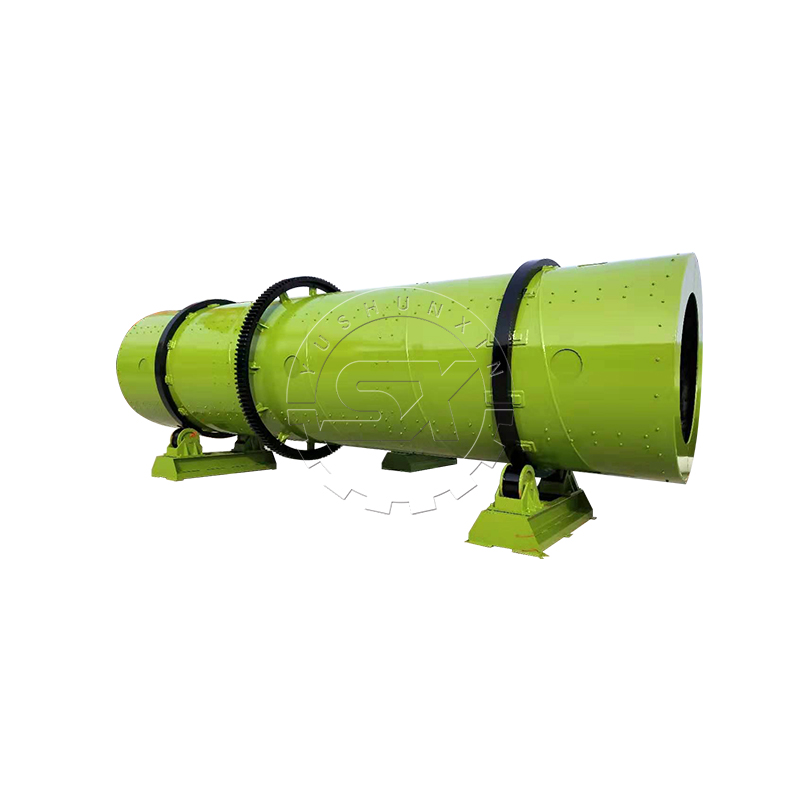
Granulation Equipment for Fertilizer Production Maintenance

Organic fertilizer is an indispensable raw material in today’s agricultural production. Organic fertilizer granulator converts materials into organic fertilizer and then processed into particles, which can help customers better package and use. Let’s talk about the steps and equipment needed in the production process of organic fertilizer.

Steps and equipment required for making organic fertilizer:

1. Ground strip stacker, crawler tipper, or material fermentation tank, trough thrower
2. Evenly sprinkle microbial agent, turn over the pile for fermentation, heat, smell, decompose and kill bacteria
3. Ferment for 15-20 days. According to different temperatures and times, use the dumper to improve the fermentation speed.

Rotary Drum Pellet Compost Production Equipment

4. Complete fermentation, decomposition and out of the tank (ground type, direct stacking with forklift)
5. Coarse and fine screening with screening machine (the screened powdery fertilizer can be sold directly)
6. The screened large pieces are crushed by the crusher and returned to the screening machine.

7. Mix the required trace elements with a premixer,
8. Granulate with fertilizer granulator.
9. Enter the dryer and cooler for drying and cooling.

10. Automatic packaging machine for sale

Maintenance method of organic fertilizer granulator:

1. Start preheating and replace grease.
2. Replace the gear oil.
3. Reasonable maintenance, full and reasonable maintenance is very necessary.

4. Replacement of vulnerable parts. Vulnerable parts are the main working parts of the new organic fertilizer granulator.
5. Humanized production. The humanized culture and humanized operation of the equipment is a warm measure to ensure the normal operation of the machine.

Introduce the steps and equipment required for making organic fertilizer and the maintenance knowledge of the equipment. Hope to help you.