How to Choose the Right Fertilizer Granulation Plant for Your Raw Materials

When you plan a fertilizer production project, choosing the right granulation solution starts with understanding your raw materials. Different materials have different moisture levels, particle sizes, chemical properties, and granulation behaviors. A suitable production system can help you achieve stable operation and produce fertilizer products that match your target market.

Before selecting equipment, you can evaluate your materials, production capacity, and final product requirements. A professional supplier can help you compare different technologies and create a solution based on your actual situation.

Understand Your Raw Materials Before Selecting Equipment

Your raw materials influence the granulation process directly. Some materials have good compressibility and lower moisture, while others require additional preparation before granulation.

For example, organic materials may need fermentation, crushing, and screening before entering the granulation stage. Mineral or compound fertilizer materials may require precise mixing and moisture control to achieve consistent granules.

If you are planning a commercial fertilizer pellet production line, understanding your material characteristics helps you select equipment that matches your production goals.
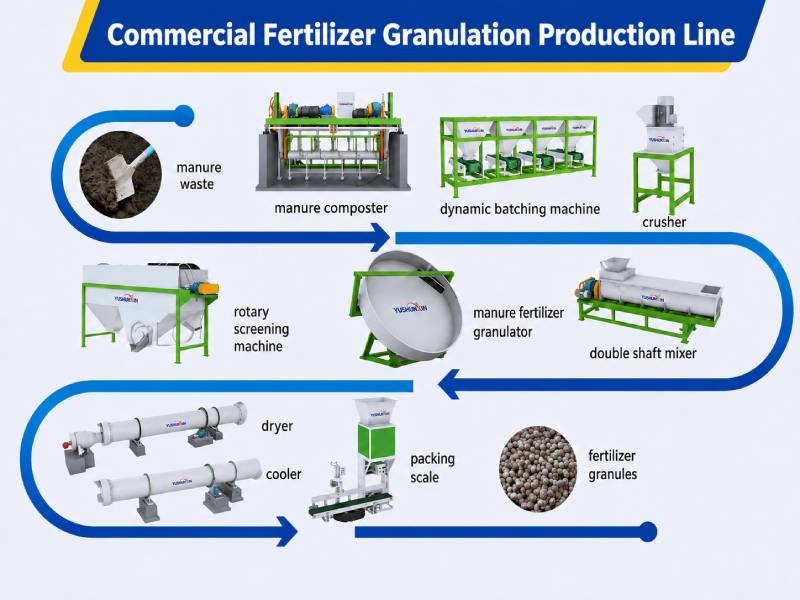
Commercial Fertilizer Granulation Production Line

Match Granulation Technology with Your Product Requirements

Different granulation technologies create different production advantages. Your choice may depend on the required particle size, granule appearance, production capacity, and energy consumption.

For projects requiring continuous production and stable output, a rotary drum granulator fertilizer production line can be considered as one possible solution. This type of system is commonly integrated with mixing, drying, cooling, screening, and coating processes to create a complete fertilizer production flow.

For materials with different characteristics, other granulation methods may also provide suitable options. Comparing equipment performance with your raw materials helps you avoid selecting a system based only on capacity numbers.

Consider Capacity and Investment Together

Production capacity is another important factor when choosing a fertilizer granulation plant. A small local fertilizer business and a large fertilizer manufacturer usually have different equipment requirements.

Many customers first ask how much does a fertilizer granulation plant cost, but the final investment depends on factors such as raw material preparation, production scale, automation level, and supporting equipment.

An industrial scale fertilizer granulation system may include automatic feeding, batching, granulation, drying, cooling, screening, packaging, and control systems. Reviewing the complete process helps you understand the relationship between investment and production efficiency.

Plan for Future Production Needs

When you design your fertilizer project, you can also consider future product expansion. If you plan to produce different fertilizer formulas or increase output later, a flexible equipment layout may provide more convenience.

Automation can also improve production management. A fertilizer granulation plant with automatic packaging connects granulation with the final packing stage, creating a smoother workflow from raw material processing to finished fertilizer bags.

Click here for more details to explore more fertilizer granulation solutions.

Choose a Solution Based on Your Project Goals

The right fertilizer granulation plant depends on the relationship between your raw materials, product requirements, production capacity, and investment plan. By evaluating these factors together, you can find a configuration that fits your business development.

For more information about fertilizer granulation solutions and equipment options, you can visit https://www.shunxin.eu/fertilizer-granulation-plant/
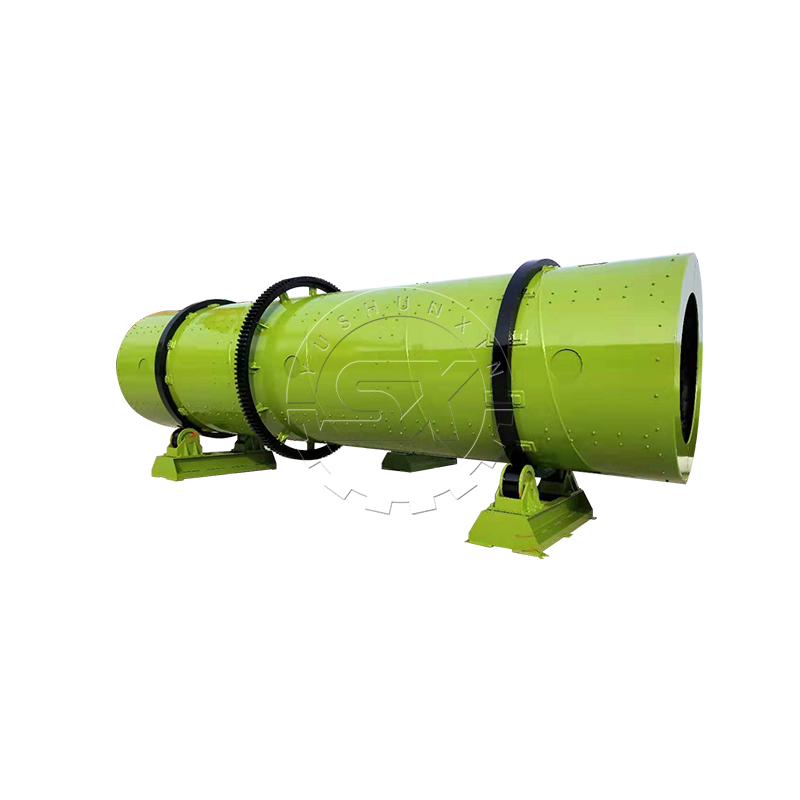
How make organi fertilizer granules with drum granulation equipment

1. In the solid granulation process of rotary drum granulator, urea, ammonium chloride, ammonium sulfate, potassium chloride and other single base fertilizers are used as raw materials and mixed in a certain proportion (mainly determined by the local market demand and soil test results)).

Rotary Drum Pellet Compost Production Equipment

2. Then use fertilizer mixer to mix the dispersed raw materials evenly and crush them to a certain fineness. Next is the main necessary step – granulation, here you need a drum granulator.

3. The material is sent to the drum granulator by belt conveyor, and agglomerates to form particles through a series of humidification and heating processes.

4. The particles here are only semi-finished products. They need further treatment, including drying, screening, cooling and packaging. After all these steps, high quality compound fertilizer products can be obtained.

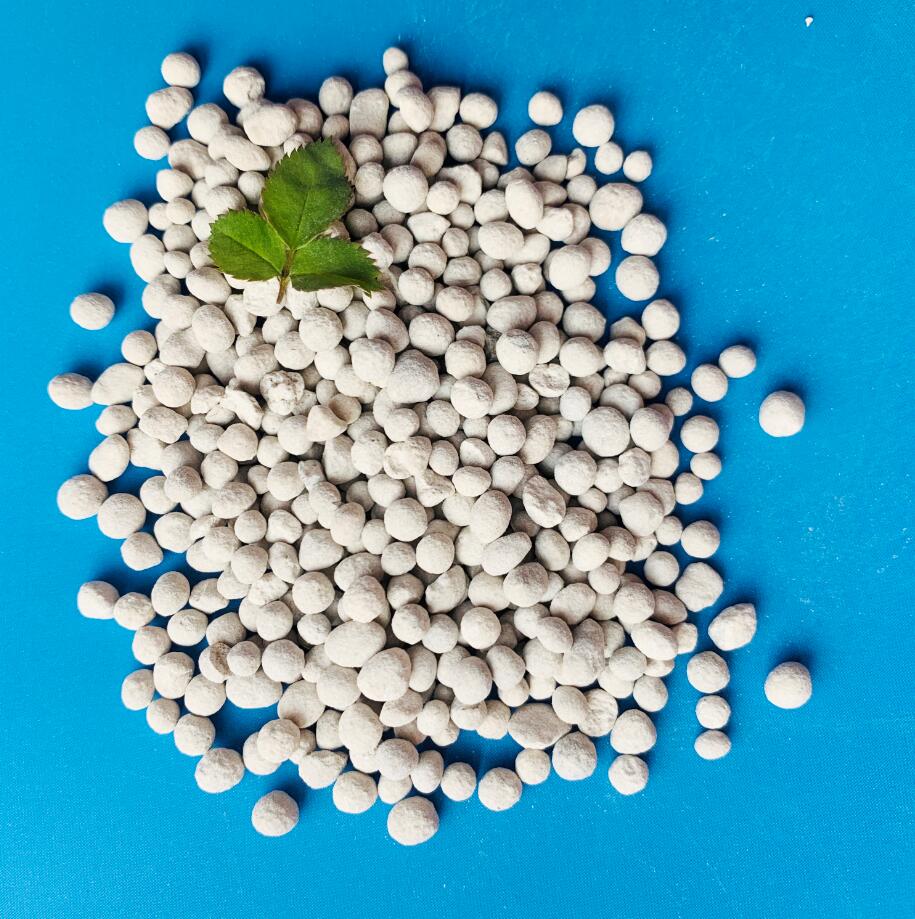
Drum granulator is the key equipment of NPK fertilizer granules production line, which is suitable for cold and hot granulation in large and medium-sized compound fertilizer plants. It and ordinary fertilizer granulator are wet granulation. By adding a certain amount of water and steam, the raw materials in the drum will become even and moist in the granulation process. Then, as the drum rotates, the material will combine and roll into particles. The fertilizer particles are spherical with a diameter of 3-4mm.

Drum granulator is the key equipment of NPK fertilizer production line, which is suitable for cold and hot granulation in large and medium-sized compound fertilizer plants. It and ordinary fertilizer granulator are wet granulation. By adding a certain amount of water and steam, the raw materials in the drum will become even and moist in the granulation process. Then, as the drum rotates, the material will combine and roll into particles. The fertilizer particles are spherical with a diameter of 3-4mm.

Why choose?

1. High granulation rate, drum granulator can adjust speed and control granulation.
2. Using solid granulation method, raw materials are easy to obtain and processing is relatively simple.
3. Liquid and steam injection is easy, and pipes and frames are provided.
4. Low investment, low production cost and high return.
5. The drum granulator uses the corrosion-resistant rubber engineering plastic as the lining to better protect the material from drum damage.
6. The particles produced belong to the secondary processing of base fertilizer, so there is almost no environmental pollution problem.
7. High quality steel and gear, stable operation, low noise.
8. Equipped with armrest shovel to help clean the roller.

Technical Parameters

Model Barrel Power Prod Capacity Overall dimensions L× W ×H weight
Inclination Internal diameter length Rotation speed
0 m m r/min kw t/h m t
ZG1.2×4 2-2.5 1.2 4 17 5.5 1-3 4.6×2.2×2.0 2.7
ZG1.4×5 2-2.5 1.4 5 14 7.5 3-5 4.8×2.8×2.3 8.5
ZG1.6×6 2-2.5 1.6 6 11.5 11 5-8 7.0×3.2×3.1 12.0
ZG1.8×7 2-2.5 1.8 7 11.5 15 8-10 8.3×3.5×3.3 18.5
ZG2.0×8 2-2.5 2.0 8 11 18.5 10-15 9.1×3.6×3.5 22.0
ZG2.2×8 2-2.5 2.2 8 10.5 22 15-20 9.5×4.4×3.9 28.0


Dry Granulation Fertilizer Production Technology

Non drying fertilizer granulation technology is mainly used for products with low water content. Generally, moisture content below 10% is a critical value. (some materials can reach 16%, for example, some contain only crystal water). Some organic fertilizer manufacturing processes have low water content, no need to dry, and save energy.

Dry granulation

The double roller granulator belongs to drying granulation equipment without drying process. It has high granulation density, good fertilizer efficiency and high organic content. The particles are flat and round, suitable for compound fertilizer.

Most of the particles produced by dry granulation are irregular particles (such as ordinary particle size potassium fertilizer), and their shape is similar to the shape of small gravel. The double roller granulator can produce all kinds of high, medium and low concentration NPK compound fertilizer and organic-inorganic compound fertilizer granulation, which meets the requirements of energy conservation and environmental protection.

Fertilizer granulation technology without drying extruder

The dry powder extruder consists of five parts: frame, head, pressure reducer, motor and crusher. It has the advantages of simple structure, high stability, convenient operation and maintenance, and strong adaptability of raw materials.