Seasonal Feedstock Changes: Planning a Flexible Organic Fertilizer Production Line

Does your manure supply become wetter during rainy months, while crop residues arrive mainly after harvest? Planning an organic fertilizer production line for seasonal feedstocks starts with understanding those changes. You can compare equipment proposals against the materials available throughout the year, rather than one convenient sample.

What Changes Between Your Supply Seasons?

Begin with a monthly supply calendar. Record each material’s source, expected quantity, moisture, delivery frequency, and storage conditions. Separate measured figures from estimates so your supplier can identify gaps.

Keep a simple delivery log during the first season, then compare actual material quantities and moisture readings with the assumptions used to size your proposed production line.

Also, distinguish fresh manure from mature compost. They enter different points in the production process. If you purchase compost, ask how the supplier documents its condition and consistency between deliveries.

How Can You Prepare Different Materials?

Your organic fertilizer plant feedstock preparation can reflect the differences between wet manure, fibrous residues, and purchased compost. Discuss receiving checks, removal of unwanted objects, size reduction, and mixing before selecting individual machines.

For fresh organic inputs, review the composting stage and how your team evaluates readiness for further processing. A granulator does not replace composting. Consequently, clarify which preparation steps belong within the quotation and which your existing facility handles.

How Does Moisture Affect the Proposed Route?

Discuss organic fertilizer processing line moisture adjustment using representative samples from wetter and drier periods. Ask where operators measure moisture and which adjustments the proposed process allows.

Depending on the material, your discussion may cover dewatering, mixing with suitable drier ingredients, or changes to drying duty. Adding another ingredient also changes the formulation, so evaluate its suitability alongside moisture.

You can explore granulation routes for prepared organic materials when comparing powder and granular product plans. Request operating assumptions for each proposed route.
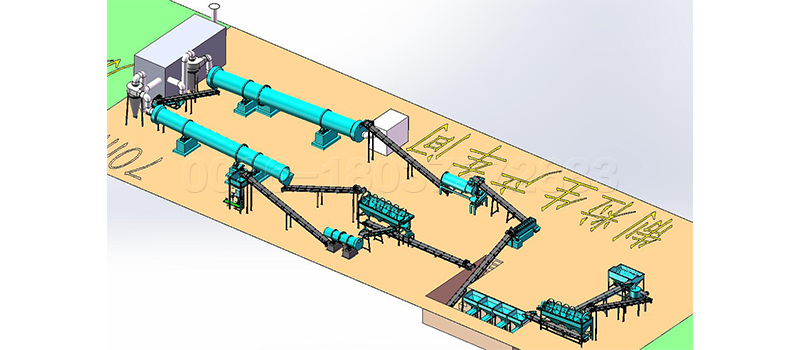
Organic Fertilizer Production Process

Where Can You Keep Material Between Stages?

Your organic fertilizer production system buffer storage can separate delivery schedules from daily processing. Discuss distinct areas for incoming feedstock, material undergoing preparation, and material ready for production.

Then review covered storage, drainage, loader access, and batch identification against your site conditions. Ask how storage duration affects the material you intend to process. Extra storage space alone does not establish acceptable storage conditions.

What Can You Agree Before Ordering?

For an organic fertilizer line configuration for variable inputs, share your seasonal supply calendar, available space, target output, and finished product requirements. Request a proposal that identifies the feedstock range behind its capacity estimate.

Compare representative seasonal mixtures through trials where practical. Record preparation requirements, finished product quality, screening returns, and drying needs. Then discuss which changes operators can manage through settings and which involve different equipment or additional preparation.

YUSHUNXIN presents powder and granular production routes for organic materials. Click here for more details as you prepare your project brief.

To discuss your seasonal material supply, visit https://www.shunxin.eu/organic-fertilizer-production-line/ and share your planned products and operating schedule.
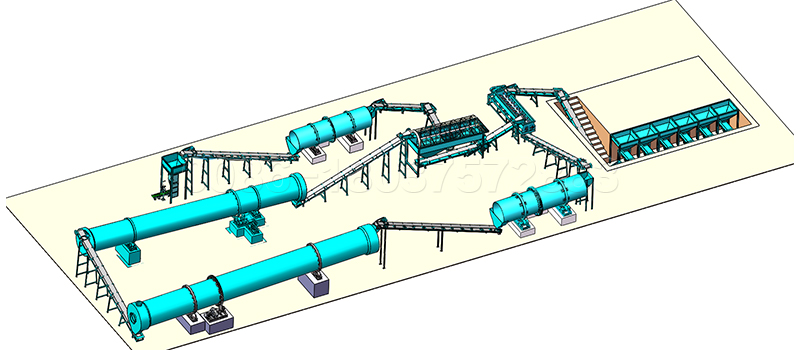
Formular for npk fertilizer production

From a technical point of view, the important factor in the formulation design of extrusion granulation products in NPK fertilizer production line is the characteristics of materials. Next, we discuss another aspect of the influencing factors, that is, the influence of the type of raw materials on the formula.

1. Material compatibility

Theoretically, any proportion of NP or K base fertilizer can be prepared, and trace elements and even pesticides should be added if necessary. However, materials must be limited by compatibility. The substances in the formula shall not have chemical reaction in the process of fertilizer manufacturing, and occasional reaction shall not be allowed.

2. Effect of urea on formula

The international fertilizer center has done a lot of experiments on the effect of urea on the performance of compound fertilizer, although the report does not mention the same example as the product formula we are studying, and most experiments do not carry out granulation on extrusion. Yes, but its conclusion is still useful to us.

NPK Drum Granulation Line

Because urea absorbs moisture easily, the critical relative humidity of NPK compound fertilizer decreases significantly. At the same time, the international fertilizer center also found that this effect is more serious when potassium chloride is used as the potassium source of compound fertilizer.

Due to the low critical relative humidity, urea based compound fertilizer is easy to absorb water, which blocks the screen, pipeline, chute, etc.
When the temperature increases, the critical relative humidity of urea based compound decreases rapidly.

The production capacity of the dryer must be determined by many factors. Some urea based NPK fertilizers begin to soften at 70 ℃. If the outlet temperature of the dryer is higher than this temperature, the fertilizer particles will be too soft, the granulation process will be out of control (the particles are too large), and the internal scabs will form. Drying causes difficulties in screening and transportation.

In the same report, the international fertilizer center also tested other aspects of urea, such as water absorption, moisture permeability, water holding capacity, particle integrity, fluidity and agglomeration. The result is negative, which will have an adverse effect.

In short, the formula design test and production of extrusion granulation products in compound fertilizer production line show that the use of urea in compound fertilizer will encounter great trouble, not only because it affects the storage and transportation performance of products, but also because it also has a certain impact on the production process.

More info on npk fertilizer production, welcome go to https://www.fertilizer-plants.com/compound-fertilizer-production-line/

Powder Fertilizer VS Granular One Which One is Better for Plants?

Organic fertilizer is a kind of organic fertilizer made from poultry manure, combined with fermentation bacteria, straw and other auxiliary materials, using traditional fermentation methods or organic fertilizer production equipment.

For commercial organic fertilizers on the market, two more popular forms of finished organic fertilizers are powdered and granular. What is the processing technology of powdery organic fertilizer and granular organic fertilizer? Which is better?

Bio Fertilizer Plant Design

How to make powder fertilizer? Here are machines and solutions for your reference:https://organicfertilizerplants.com/

Processing technology of granular organic fertilizer:

The equipment used for granular organic fertilizer processing and production include: fermentation dumper, pulverizer, fertilizer disc granulator, screening machine and packaging machine
The fermented fertilizer is crushed by a pulverizer, and then the organic fertilizer particles are produced by a disk fertilizer granulator.

The organic fertilizer particles are screened by a screening machine, dried, and finally transported to the discharge bin for packaging, weighing and sealing.

Processing technology of powdery organic fertilizer:

The production line of powdery organic fertilizer needs to purchase equipment: fermentation tipping machine, pulverizer, packaging machine, etc.

The advantages of powdery organic fertilizer are: less investment in production and manufacture;

It has better fusion with roots, wider diffusion range, faster root fertility effect and faster absorption

Disadvantages:

It is easy to raise dust, get damp and caking during construction.

Advantages of granular organic fertilizer

Some inorganic components can be added to fertilizer to improve fertility. It’s more convenient to apply.
two
Humic acid + fertilizer! what is it?

How to make organic fertilizer granules? Go to https://organicfertilizerplants.com/organic-fertilizer-granulation-machine/