
A French fries plant, a potato chip maker, or a frozen vegetable factory that adds a blanching step usually wants to know how fast the machine pays for itself. The industrial vegetable blanching machine for commercial production stabilizes color, reduces raw odor, and prepares vegetables before frying or freezing, and its return comes from labor, quality, and waste savings. This article explains the cost items and the calculation that turns a food equipment purchase into a measured return.
Which Cost Items Belong in a Blanching ROI Calculation?
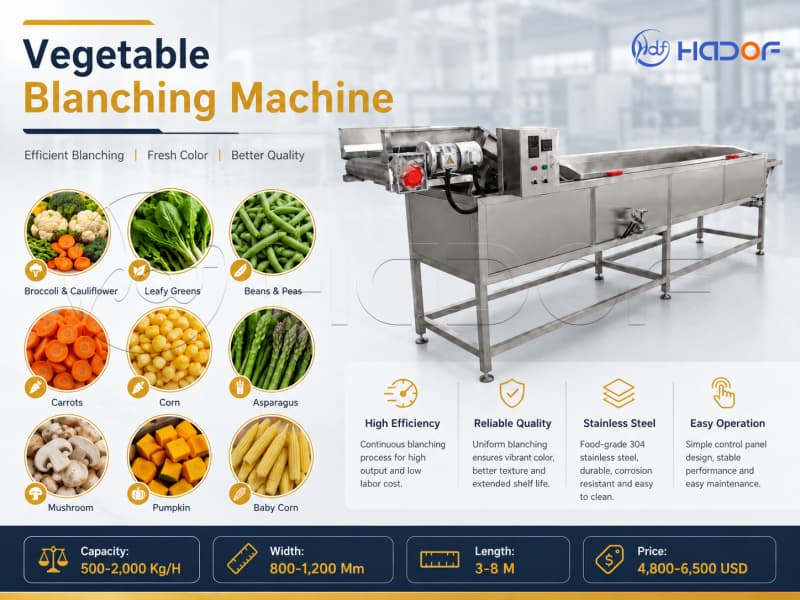
ROI starts with the total landed cost of the machine, not only the list price, so a buyer adds delivery, installation, utility connection, and the first year of maintenance. The continuous vegetable blancher with electric, steam, or gas heating comes in capacities around 500, 1,000, or 2,000 kg/h, and the heating choice changes the operating cost. A buyer also records energy, water, and the labor hours the machine removes. These items turn a loose food cost estimate into a figure the plant can defend.
How Does the Blancher Reduce Labor and Energy?
A continuous blancher replaces the pots, strainers, and hand timing that a manual station requires, so one worker supervises a process that once needed several. The vegetable blanching equipment for a fried food line holds a steady temperature and moves product forward on a controlled belt, which removes the stop-start rhythm of batch cooking. Steam and gas options let a plant choose the energy source that fits its local utility cost. These savings repeat every shift and form the core of the food production return.
How Does Blanching Improve Yield and Reduce Waste?
Blanching prepares the product before frying or freezing, and that preparation shows up in color, texture, and final yield. The machine stabilizes vegetable color, reduces raw odor, and deactivates surface enzymes, so fewer batches leave the line as rejects. A more even product also absorbs less excess oil, which lowers both waste and oil cost. This food preparation step therefore adds value that a simple ROI calculation should count as avoided loss.
How Does the Blancher Connect With a Freezing Line?
A blanching machine performs best when the next stage receives product at the right temperature, so the connection matters for the return. The blancher feeds a quick freezer for blanched vegetables, a cooling step, and a packer, and each handoff keeps the product moving. A smooth connection prevents the pile-ups that idle the freezer and waste energy. This line design protects the food processing system and keeps the payback on schedule.
How Should a Plant Measure Payback Months?
Blanching process removes a manual step, so the plant can estimate payback by dividing the delivered cost by the monthly labor, energy, and waste saving. You can review the blanching machine manufacturer before a purchase, because service and spare parts keep the machine productive. A measured payback turns the food machinery decision from a guess into a budget the factory can approve.
Conclusion
An industrial vegetable blanching machine pays for itself through labor, energy, and waste savings, and a buyer calculates the return by dividing the delivered cost by those monthly benefits. These checks protect the food production budget. If you have interests, you can learn more about https://www.friedfoodsolutions.com/vegetable-blanching-machine/